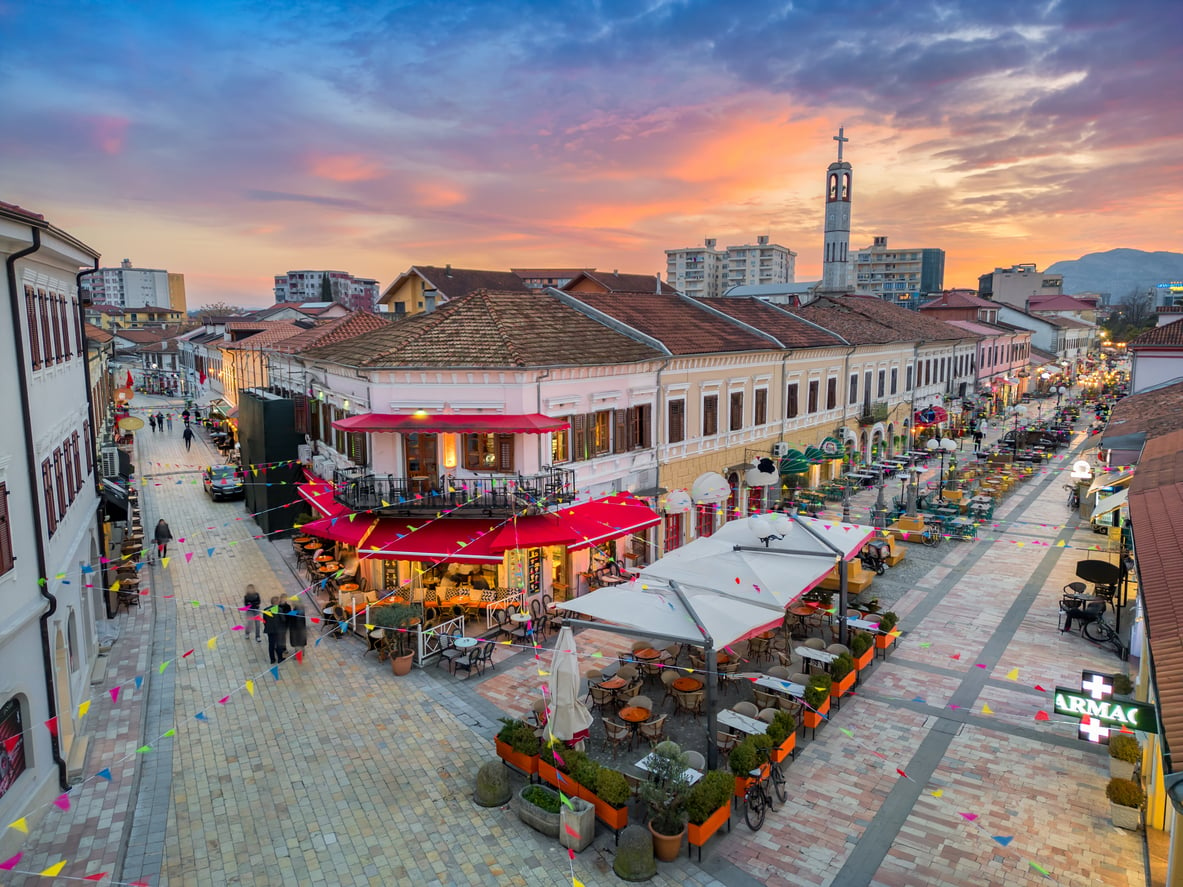


A growing number of Americans moving to Albania are skipping the Schengen permit grind entirely, drawn by a bilateral arrangement that lets US passport holders stay up to one year without a visa. The policy, restored under Diplomatic Circular Memorandum No. 124/2022, is one of the most permissive entry rules in Europe for US citizens. It requires no income proof, no application and no pre-approval.
The numbers remain small but are climbing. Albania had roughly 22,000 foreign residents with permits at the end of 2024, with more than 3,000 arriving from the Americas, Africa or Oceania, a nearly 25% increase year over year, the Albanian Institute of Statistics reports. Tourism revenue hit $5.72 billion in 2025, the agency says.
How the one-year visa-free rule works for Americans
The US Embassy in Tirana confirms that Americans may remain in Albania for up to one year without a residence permit. Border officers log entries electronically rather than stamping passports, so the embassy advises travelers to keep boarding passes as proof of arrival date.
The catch is the reset rule. To start a fresh one-year window, Americans must leave Albania and stay out for 90 consecutive days. Re-entering sooner risks being treated as a continuation of the original stay, immigration lawyers say. Anyone planning to stay beyond 12 months has to apply for a residence permit through the Regional Directorate of Border and Migration Police at least 60 days before the visa-free period ends.
Cost of living in Albania for US expats
Reporting from International Living profiles Americans paying around $527 a month for a Tirana apartment and citing Albania’s 52nd-place finish on the 2024 Global Peace Index. The US ranked 131st. Cost breakdowns compiled for 2025 and 2026 put a one-bedroom in central Tirana between $500 and $600, with comparable units in Durrës and Shkodra running 30% to 50% lower.
A May article in The Sun followed a California couple, Nate and Alicia of “The Passport Couple,” who relocated to Albania after originally targeting Italy. They reported total monthly spending around $1,500, including $480 rent. They also flagged friction points: cash-only landlords, limited rentals in newer apartment complexes and logistical hurdles around utilities and banking.
What’s driving Americans moving to Albania
Albania’s pull isn’t a tax break or a golden visa program. It’s the absence of bureaucratic friction at a moment when traditional European destinations are tightening. Spain ended its golden visa in April 2025. Portugal’s non-habitual resident regime closed to most new applicants in 2024. France raised income floors for long-stay visas. Albania, by contrast, asks nothing upfront from American arrivals.
The trade-offs are real. Albanian wages are a fraction of US salaries, so the country works for remote earners and retirees but not for professionals seeking local employment. Banking, leases and healthcare access can be cumbersome without local Albanian.
What this tells us about American emigration patterns
The Albania case fits a wider pattern in 2025 and 2026 American emigration data: US citizens are routing around the Schengen Area’s 90-day cap and the income-tested permit regimes that govern Western Europe. Balkan and accession-track countries with looser entry rules are absorbing a small but rising share of US arrivals.
What the data does not yet show is retention. Albania’s 22,000 foreign-permit figure includes long-tenured residents from Italy, Turkey, China and elsewhere, and INSTAT does not publish a separate American breakdown. Whether the Americans now arriving on the one-year rule convert to residency or rotate out after 12 months will determine whether this is a durable migration corridor or a long layover.