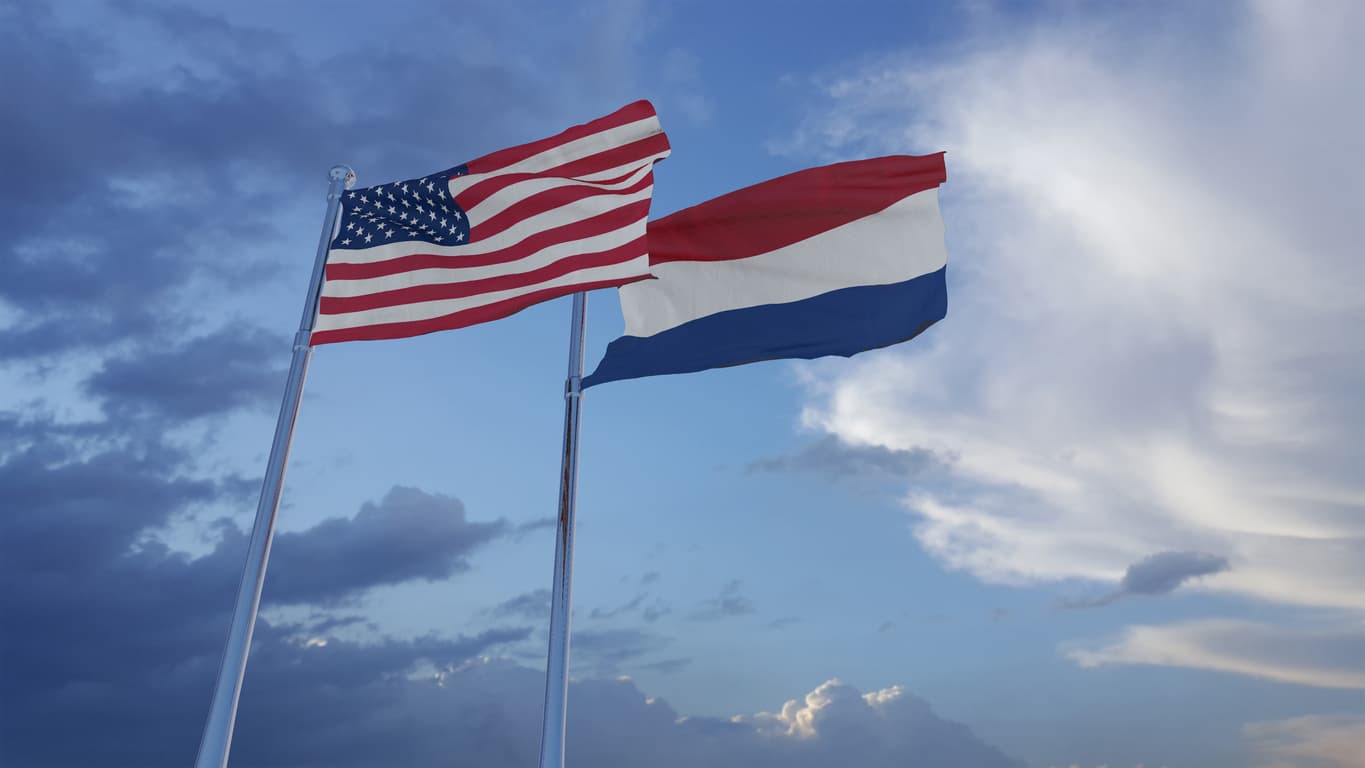


An article published on December 8, 2025 by Atossa Araxia Abrahamian in The New Yorker highlights a quiet but growing exodus of Americans who are no longer content to joke about leaving the United States. They are actively doing the paperwork, booking the flights, and starting over abroad. Their stories trace a reversal of an old migration story: instead of people coming to America seeking safety and opportunity, some Americans now feel compelled to leave for those very reasons. So, why are Americans moving to the Netherlands? And, what can this tell us about the overall impact of Americans moving abroad?
A New Kind of American Migrant
Instead of the familiar trope of celebrities threatening to decamp to Canada every election cycle, this new cohort is made up of middle-class professionals, military veterans, and civil servants who feel pushed to the brink by political instability, rising costs, and a fraying social contract. They are not fleeing a single catastrophe so much as a long accumulation of grievances. That includes strained finances despite good salaries, anxiety about authoritarian drift, and a moral weariness from watching fellow citizens struggle without a safety net.
What once lived as late-night jokes on social media has hardened into spreadsheets, legal consultations, and one-way tickets. Visa routes that were once obscure (ex. investor schemes or heritage passports) have become the stuff of viral videos and niche Facebook groups, where Americans trade notes on everything from second citizenship laws to how to use Social Security income to qualify for residency abroad.
Within this universe of exit plans, the Netherlands stands out less as a dream destination and more as a pragmatic escape hatch. Its appeal lies in a mix of reliable public services, strong infrastructure, and, crucially, a midcentury bilateral agreement that allows U.S. entrepreneurs to register modest businesses and obtain residence permits for themselves and their families.
Guided Exits And New Industries
A small industry has emerged to guide would-be emigrants through this transition. Companies like G.T.F.O. Tours (short for “Get The Fuck Out”) organize weeklong trips that mix brewery dinners, neighborhood walks, and housing briefings with seminars on visas, banking, and cultural norms. For participants, these tours are less about tourism than about test-driving a future life: talking to real-estate agents, meeting local migrants, and confronting what it would actually cost to move.
Lives In Transition
The people signing up for these tours are often those who once embodied an older story of American striving (veterans, former organizers, nonprofit workers, and corporate professionals) who did what they were told: served, studied, saved, and still found themselves selling plasma or living under constant financial and psychological strain.
There are many answers to the question, ‘Why are Americans moving to the Netherlands?,’ each as nuanced as the next. For many, Trump’s second term is less the cause than the catalyst, confirming a fear that the future in the U.S. will be poorer, meaner, and more precarious than the past.
What pushes them is rarely pure ideology. It is the sense that empathy itself has become a liability: that to care about health care costs, civil rights, gun violence, or democratic erosion is to live in a permanent state of moral whiplash. For some, the decision to leave feels like an attempt to repair a kind of moral injury, after years of serving a country they no longer recognize in its laws or leaders.
Digital platforms are both accelerant and filter for these choices. Influencers who document their lives abroad; safer streets, cheaper doctors’ bills, calmer school drop-offs, offer an alluring counterpoint to American headlines, even when they gesture at the grind of visas, paperwork, and cultural missteps. Their feeds give shape to a possibility: that the problems of American life are not inevitable, but contingent, and escapable.
Becoming Immigrants, Not Expats
Once in the Netherlands, many Americans discover that they are not simply “expats” in the glossy corporate sense but immigrants entering a competitive housing market and an ongoing debate about migration. Self-employed arrivals under the DAFT scheme often struggle to secure rentals without Dutch work contracts, sometimes offering a year’s rent in advance to compete. Informal networks form, including airport pickups, furniture runs, job referrals, etc., which mirrors the mutual aid often seen in less privileged migrant communities worldwide.
The countries they move to are hardly immune to the forces they are fleeing. Right-wing populism, anti-immigration protests, and culture-war politics are visible in European streets and parliaments, unsettling the idea that safety lies just a passport stamp away. Yet for these Americans, the bet is that imperfect systems elsewhere still feel less volatile than home.
A Reversal Of The Old Story,
The most striking part of this phenomenon is how sharply it inverts a foundational American narrative. For generations, people uprooted their lives to come to the United States in search of security, opportunity, and a better future for their children; now a significant share of Americans cite those very reasons as grounds to leave. In this reversal, the U.S. is no longer uniquely imagined as the place where one goes to feel free. It becomes one of many places people might, if they can, leave behind.