

Amid stepped-up deportation efforts and rising identity awareness, Mexican parents in Oklahoma crowd consulate pop‑ups to safeguard their children’s futures on both sides of the border.
A crowded church, a quiet fear
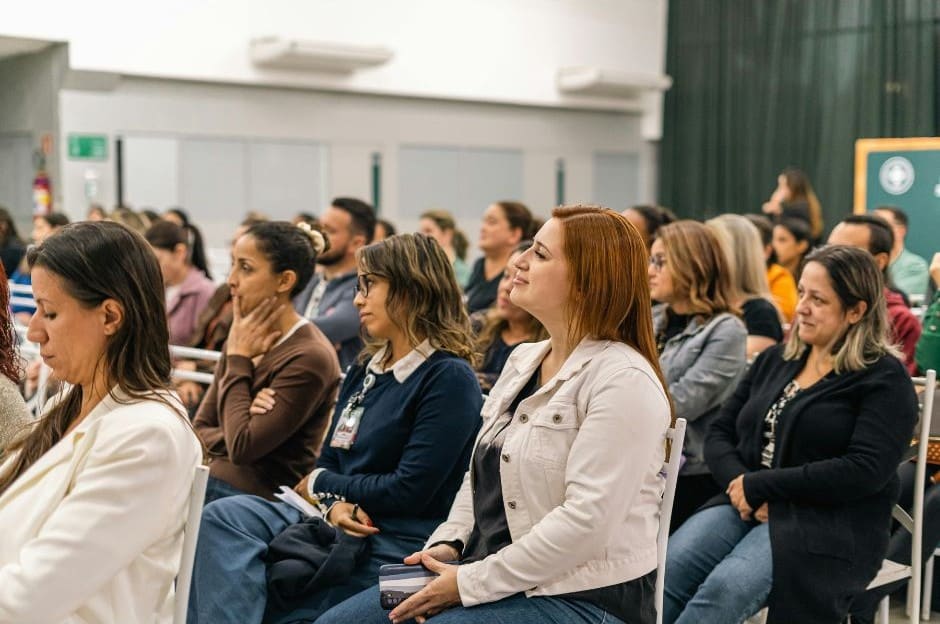
On a recent December morning, the halls of St. Thomas More Catholic Church in Tulsa turned into a maze of strollers, manila folders, and whispered prayers as hundreds of families pressed toward makeshift service windows. Staff from the Mexican consulate in Oklahoma City had set up shop in the parish to register children and adults for Mexican nationality, a document many parents now see as their children’s lifeline if immigration agents knock on the door.
By midmorning, the line snaked past classrooms and down hallways, filled with parents clutching birth certificates, passports, and the hands of their children who were born into one country but tied by blood to another. What looked like a bureaucratic errand was, for many, an act of quiet emergency planning.
Parents preparing for the unthinkable
M. Rubio arrived at the church before 8 a.m., joining a line that would keep her there until after 10. She has no legal status in the United States and asked that only her last name be used, but she speaks bluntly about why she came: to make sure her U.S.-born daughter can follow her if deportation forces the family back to Mexico.
Rubio has spent the past three months building what she calls a Plan B. She has signed a power of attorney designating who will care for her two children if she and her husband are arrested and has had difficult conversations with her 6‑year‑old son about what to do if “Mom and Dad don’t come home.” Her son, who is not a U.S. citizen, now has a Mexican passport, while her daughter carries a U.S. passport and is in the process of gaining Mexican nationality.
“Immigration has all of us really tense,” Rubio said, explaining that dual citizenship feels like a shield for her daughter in a country where deportation sweeps and family separations loom over everyday routines. For her, registering her daughter as Mexican is not about renouncing the United States, but about multiplying the institutions that could step in to protect her.
Dual citizenship as protection and identity
At the center of this surge is Carlos Padilla, the consul at the Mexican consulate in Oklahoma City, who has watched demand for dual citizenship climb steadily over the past two years. His office has now held two registration events at St. Thomas More, each serving roughly 250 people, and he says the appetite for documentation shows no sign of slowing.
Padilla frames the trend as both practical and profoundly personal. Legally, he notes, U.S.-born children of Mexican parents have a right to Mexican nationality, a status that grants them access to protection and services from two governments instead of one. Emotionally, he sees many applicants—especially adults—coming forward out of a desire to fully claim their heritage and feel “empowered with their entire identity” in a climate that often pressures them to choose one side of the border over the other.
He also spends time correcting misinformation. Some families, Padilla says, have been told that registering their U.S.-born children as Mexican will somehow weaken the child’s American citizenship or expose them to new forms of risk. “A lot of people didn’t know this was a possibility,” he said, adding that others have been “convinced that making their children Mexican makes them less American,” a claim he rejects outright.
Planning ahead, not panicking
For E. Espinoza, who arrived at the Tulsa event with a 10‑month‑old in her arms and another son tugging at her sleeve, the decision to apply for dual citizenship is less about immediate fear and more about refusing to be caught unprepared. Espinoza came to the United States through the asylum process two years ago, and her eldest child was born in Mexico, leaving the baby as the only U.S.-born member of the family.
She spent about three hours at the church, trading off with her husband to keep their place in line. “I’m planning ahead, in case something happens, like my deportation,” she explained, noting that ensuring her baby has the paperwork to leave the country legally is as important to her as keeping his immunization records up to date.
Padilla insists that most parents who turn up at these events are not acting out of panic but out of a basic instinct to safeguard their children’s options. “Every parent has an instinct to protect their children,” he said, arguing that if deportations were an immediate threat for everyone in the room, the atmosphere would be far more chaotic. Instead, he sees families using a moment of relative calm to put legal protections in place.
Between two countries, seeking stability
What binds Rubio, Espinoza, and the hundreds of others filing into parish halls and community centers is a shared sense that the ground beneath them can shift without warning. The Trump administration’s continued deportation campaign has intensified longstanding fears of family separation, pushing more parents to imagine worst-case scenarios they once tried to ignore.
For Rubio, that threat is not abstract. “If they detain you, you don’t know if they’ll detain you for long or for a short time,” she said, describing the current rate of family separations as “extremely strong” and unpredictable. In that uncertainty, a second nationality becomes a form of stability—a document that can help a child re‑enroll in school in Mexico, claim consular support if detained, or simply cross a border with fewer questions asked.
Padilla calls Mexican nationality “part of their story,” a legal expression of roots that stretch beyond any one address or administration. In Oklahoma, that story now plays out in crowded church basements and consulate outreach events, where the act of waiting in line with a folder of papers has become its own kind of quiet resistance: an insistence that, whatever comes next, their children will not be left without a country willing to claim them.
Source: Angelica Perez, “More Mexican nationals in Oklahoma seek Plan B for their children: dual citizenship”, The Journal Record