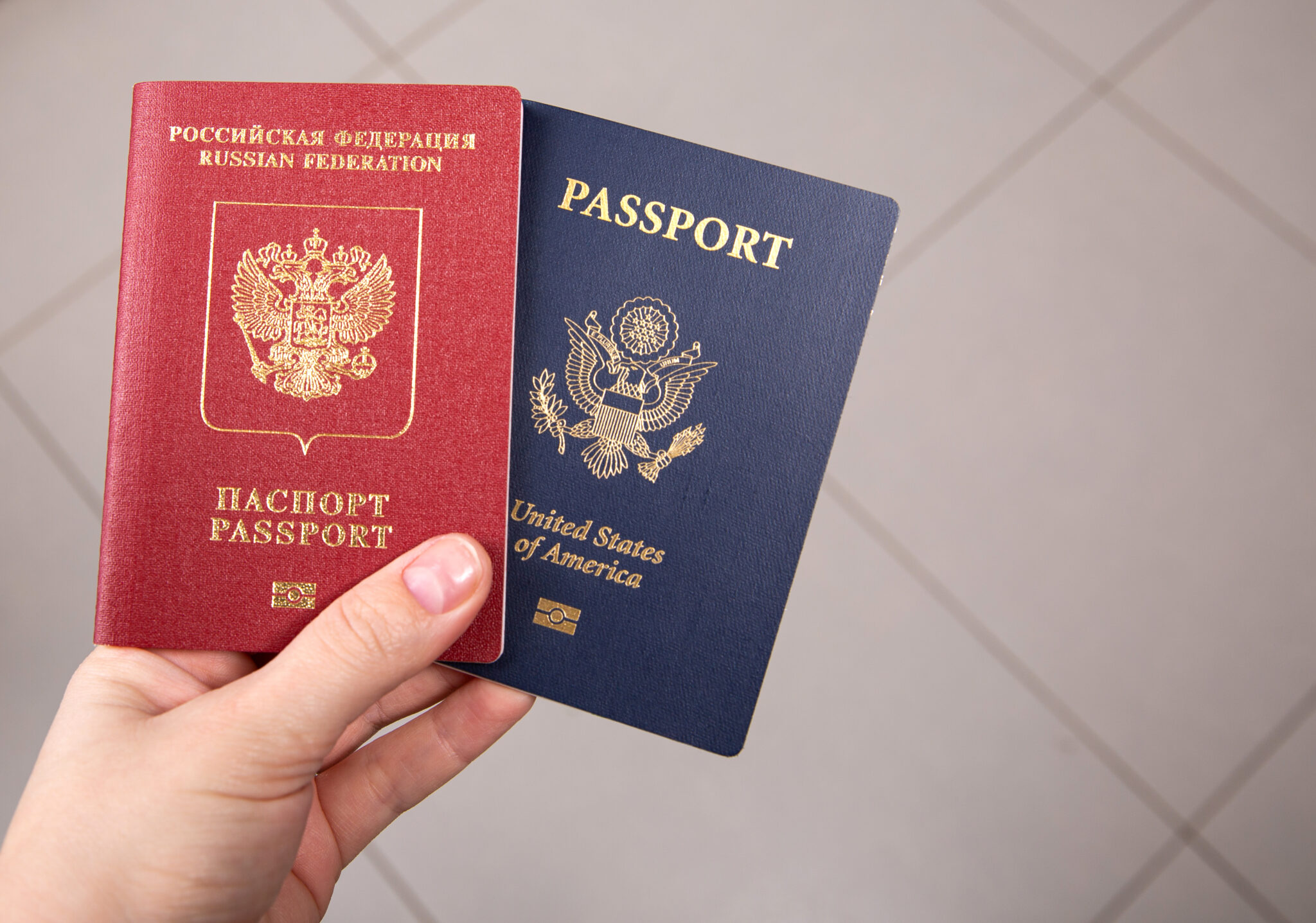


From ancestral paperwork to investment schemes, US citizens are scrambling to secure a “Plan B” passport, often overlooking tax bills, conscription rules and divided loyalties that follow them across borders.
How people qualify
Most Americans who successfully add a second citizenship do it in one of three ways: descent, investment or naturalization. Citizenship by descent typically means proving that parents, grandparents or sometimes even more distant ancestors came from a specific country, with strict rules about how far back the family tree can go and whether an ancestor’s naturalization elsewhere broke the line.
Citizenship by investment, usually available only to the wealthy, trades large cash infusions or property purchases for a fast-track passport in countries eager for capital. Naturalization routes, by contrast, rely on traditional immigration: living, working or studying in a country for years, learning the language and passing integration requirements before finally applying for a passport.
Why a second passport is so attractive
For some US citizens, a second passport is a hedge against political volatility or geopolitical hostility tied to carrying “American” documents. Holding another nationality can unlock longer stays, easier work rights and social benefits in regions that would otherwise be off-limits or capped by tight visa rules.
Travel flexibility drives much of the demand: a less politically loaded passport can mean fewer questions at the border and access to visa-free entry in blocs like the European Union or parts of Latin America. In extreme scenarios, an alternate citizenship can also serve as an emergency exit if a person needs to relocate quickly because of unrest or legal pressure in one country.
Hidden legal and tax consequences
Dual citizenship does not erase obligations; it doubles them, since each country can enforce its own laws on the same person. The United States, like Eritrea, taxes citizens on worldwide income regardless of where they live, so adding a foreign citizenship can create overlapping tax systems and complex filings rather than escaping the IRS.
Other nations may rely on residence-based taxation but still treat dual nationals as fully liable once they are on the territory, generating higher total tax burdens when systems clash. Conflicting legal expectations—on everything from inheritance to reporting requirements—can leave dual nationals choosing between strict compliance in two jurisdictions or risking penalties in one of them.
Conscription, conflict and safety
Military service can be an unwelcome surprise for dual citizens who spend most of their lives abroad but remain legally tied to another country’s draft laws. During the Russia‑Ukraine war, some dual nationals discovered that simply renewing a passport or returning home temporarily could expose them to conscription obligations they had assumed were purely theoretical.
In conflict situations, dual citizens may find that one country insists on treating them solely as its own nationals, limiting how much help a US embassy—or any other—can actually provide on the ground. Even routine tasks like renewing documents can suddenly carry risks if appearing in person at a consulate or local office places them within reach of authorities eager to enforce military or security rules.
The emotional calculus of divided loyalties
Beyond legal and financial questions, there is the quieter strain of belonging to more than one nation at once, particularly when those countries are politically at odds. Dual nationals may feel pressure to “pick a side” on hot‑button issues, even as their passports and personal histories tie them to both places in ways that resist simple loyalty tests.
For some, the second passport is fundamentally about identity—a way to formalize ancestral roots, preserve language and culture or pass a symbolic inheritance to children—rather than just queue‑skipping at airports. For others, it is a pragmatic insurance policy: a legal escape hatch they hope never to use but are no longer willing to live without in an unsettled world.
Source: Julia Buckley, “‘Grab what you can:’ The global rush for second passports”, CNN Travel