

As someone who works every day with Americans reclaiming Luxembourgish citizenship, the instinct is to bring context and calibration to this debate rather than alarm. Senator Bernie Moreno’s Exclusive Citizenship Act of 2025 is a serious and far‑reaching proposal, but it is one bill at an early stage in a long legislative process, and it does not, by itself, overturn decades of law overnight. What it does do is crystallise a particular vision of U.S. citizenship that sits uneasily beside the lived reality of millions of dual nationals whose lives span borders.
What the bill would actually do
Under the text of the proposal, it would become unlawful to hold U.S. citizenship at the same time as any foreign nationality. Existing dual citizens would be given one year after enactment either to renounce their non‑U.S. citizenship with the U.S. Department of State or to renounce their U.S. citizenship with the U.S. Department of Homeland Security; those who did nothing in that window would be treated as having “relinquished United States citizenship” and handled as foreign nationals for immigration purposes. The same logic would apply prospectively: a U.S. citizen who voluntarily acquires another citizenship after the law takes effect would be deemed to have given up U.S. citizenship, regardless of whether they intended such a consequence.
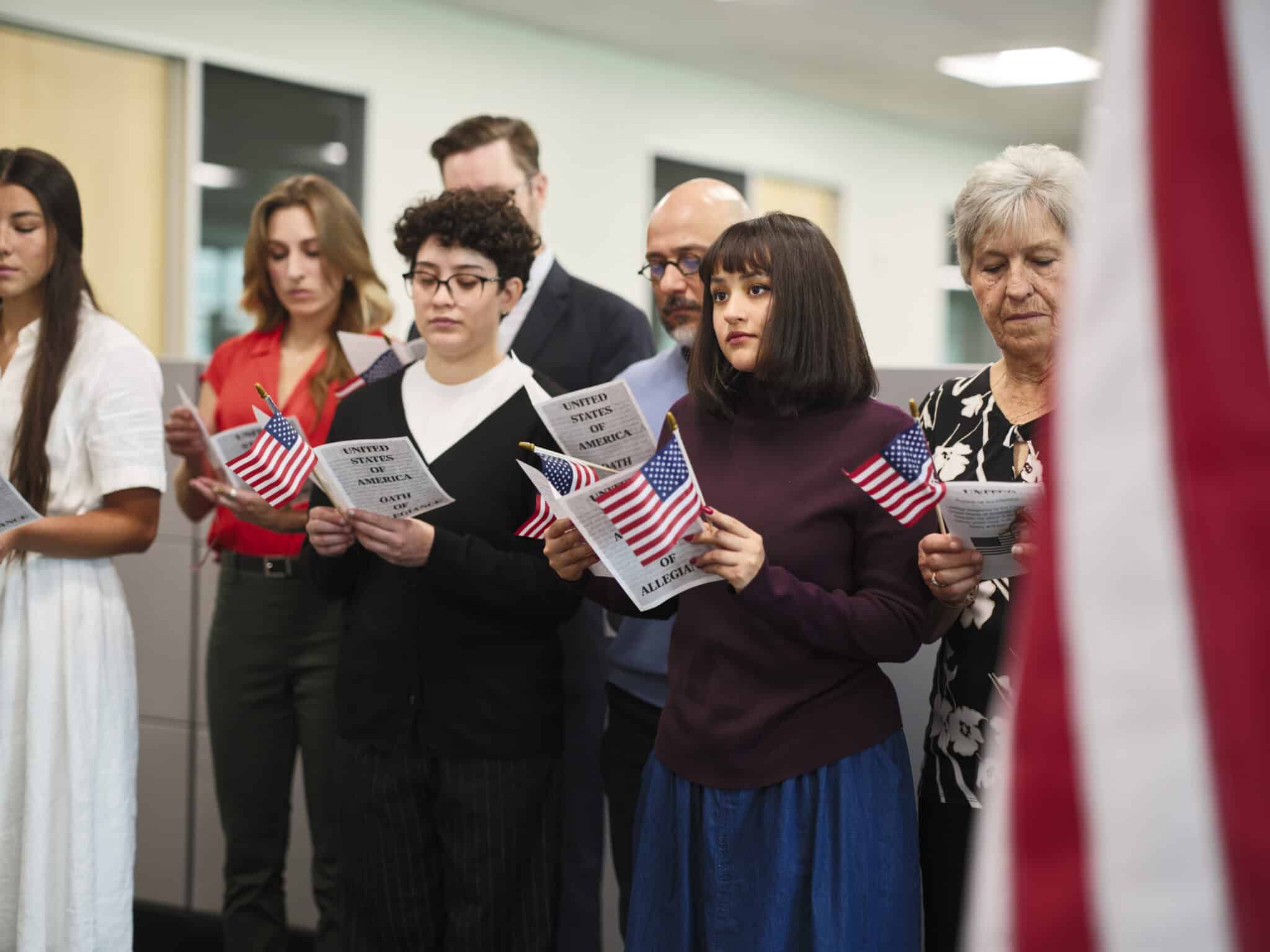
Senator Bernie Moreno, a Republican from Ohio who was born in Colombia and renounced his Colombian citizenship when he became an American at 18, frames this as a matter of undivided allegiance. In launching the bill, Senator Moreno said that becoming an American citizen was “one of the greatest honors” of his life, calling it “an honor to pledge an Oath of Allegiance to the United States of America and ONLY to the United States of America,” and declaring that “if you want to be an American, it’s all or nothing” and that “it’s time to end dual citizenship for good.” Supporters of this approach argue that allowing dual citizenship risks “conflicts of interest and divided loyalties” and see the bill as a way to reaffirm a stricter, more exclusive understanding of national belonging.
A Luxembourg perspective on dual nationality
From the vantage point of Luxembourg, the proposal looks very different. Here, the state explicitly accommodates the fact that many people hold more than one nationality: anyone who has another citizenship may voluntarily declare it for registration in the Registre national des personnes physiques, and recent statistics show that a significant share of Luxembourgers hold a second passport. In professional experience with roughly 3,100 Americans who have obtained Luxembourgish nationality, dual citizenship is treated as an ordinary part of life, not as a security problem. The only attention those clients have reported from U.S. authorities amounts to routine administrative questions — for example, being asked to list all nationalities when applying for programs such as Global Entry — rather than political loyalty tests.
That contrast reflects different legal cultures as well as different political instincts. In Luxembourg, the power to remove nationality exists but is tightly circumscribed: it is reserved for clearly fraudulent cases, such as false statements, concealed information, fake documents or marriages of convenience, and has reportedly been used only once. There are political voices here too calling for tougher measures in extreme cases — for instance, the Alternative Democratic Reform Party’s call to “extradite” dual nationals convicted of serious crimes — but these remain marginal demands, not the centre of the policy conversation. In the United States, by comparison, dual citizenship sits in what has been described as a “legal grey zone” shaped by Supreme Court jurisprudence: the government largely accepts the existence of dual nationality in practice, yet for official purposes it insists that U.S. citizens are treated only as U.S. citizens and offers no simple mechanism for voluntarily registering other citizenships.
What critics like Martha McDevitt‑Pugh and Dan Granot are saying
It is therefore unsurprising that the Exclusive Citizenship Act has drawn sharp responses from Americans abroad and civil‑rights advocates. Martha McDevitt‑Pugh, the international chair of Democrats Abroad, articulated a view shared by many dual nationals when she said that “dual citizenship is not a threat—it’s an asset that reflects the reality of an interconnected world where Americans live, work, serve, and advocate for US interests on a global scale.” In the same statement, Martha McDevitt‑Pugh warned that “questioning loyalty because a citizen possesses another passport is not just wrong; it’s an attack on the millions of Americans whose lives span borders and who contribute every day to the strength of the United States.”
Dan Granot, senior director of government relations at the Anti‑Defamation League, has cautioned that rhetoric about “dual loyalty” carries a heavy historical baggage. Dan Granot noted that accusations of “dual loyalty” have historically been used against Jews “to exclude them from public life and even justify violence,” arguing that laws built on that kind of suspicion risk reviving old prejudices in a new guise. Those perspectives matter because they highlight how quickly an abstract debate about “exclusive allegiance” can shade into suspicion of minorities and diasporas.
Legal doctrine, practical hurdles and political reality
There is also a substantial legal and practical conversation under way. Many lawyers point out that U.S. Supreme Court doctrine has, for decades, rejected the idea that Congress can strip citizenship as a mere policy instrument; loss of citizenship generally requires a clear, voluntary decision by the individual, not a presumption imposed because they took some other step, such as acquiring a second passport or missing an administrative deadline. Transforming the passive fact of holding another nationality — or failing to respond within a year — into automatic “relinquishment” raises questions under the Fourteenth Amendment’s citizenship protections and under basic due‑process principles.
On top of that, building the machinery to force millions of people to choose, to verify renunciations and to coordinate with foreign governments would be an enormous administrative project, almost certainly accompanied by litigation and diplomatic friction. Implementing this would mean new systems for verification, notifications and appeals, and potentially difficult questions about who qualifies as a dual national at birth and how to treat U.S. military personnel and public servants who hold or could acquire another citizenship.
Against that backdrop, a cautious but not apocalyptic assessment seems warranted. The view here is that the bill “does not currently reflect a broader party platform” and that “fundamentally reshaping long‑standing systems” is very different from simply introducing a piece of legislation. In recent years, “we’ve seen various bills introduced that would affect Americans abroad or American dual citizens,” and “even initiatives with explicit support from President Donald J. Trump — such as the proposal to end taxation for Americans living overseas — struggled to advance out of committee.” When one adds that President Donald Trump’s wife, Melania Trump, and their son, Barron Trump, both hold dual U.S.–Slovenian citizenship, it becomes even harder to imagine a sweeping ban sailing through Congress in its present form.
A closing message to dual citizens
For now, the Exclusive Citizenship Act of 2025 remains a proposal, not the law of the land. Dual citizenship is still legal in the United States, and no one is being asked today to surrender a passport. The consistent message to dual citizens and to those considering reclaiming Luxembourgish nationality is to stay informed and organised rather than to panic: document how you acquired your citizenships, follow the legislative process carefully, and seek professional advice where needed. Above all, it remains important to emphasise that “dual citizens, whether Luxembourgers who have naturalized in the US or Americans who have reclaimed Luxembourg citizenship, often serve as a positive bridge between both nations.” That lived reality — of families, careers and commitments that span borders — is, in the end, the strongest answer to any suggestion that belonging to more than one place is inherently disloyal.
Source: Luxembourg Times
Date: Dec. 9, 2025