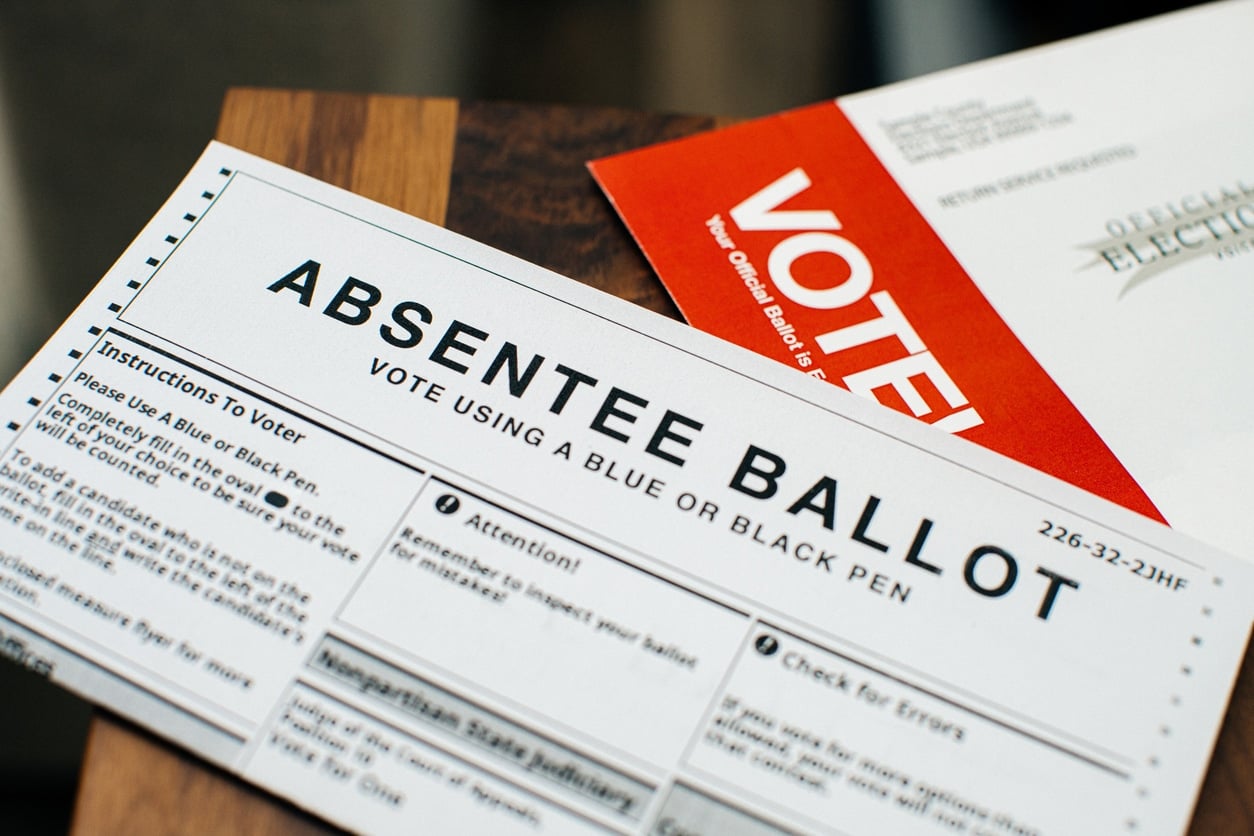


Overseas voters have become a target in the run-up to the 2026 midterms, but the legal fight and the real barrier point in different directions. The Republican National Committee has filed or backed lawsuits in Michigan, North Carolina, Pennsylvania, Arizona, Virginia and, in late June, Colorado, challenging state laws that let certain Americans abroad vote.
On April 6, 2026, the RNC sued Virginia, asking the court to cancel existing registrations and block those ballots from being counted. The cases are not identical, but the newer state-law challenges share a common target: never residents.
The narrow group the lawsuits target
The cases center on “never residents,” adults born abroad who register in some states using a parent’s last U.S. address under state laws that extend overseas-voting protections beyond the federal floor set by the Uniformed and Overseas Citizens Absentee Voting Act.
Advocates say they often include young adults whose parents are tied to the U.S. military or government service overseas, though statewide data is thin. The RNC argues that letting them vote violates state constitutions, and in its Arizona filing said these voters skew Democratic, while conceding it’s unclear how many are adult children who never lived in the state.
The results are split. The 2024 challenges in Michigan and North Carolina were dismissed, and no ballots were tossed; a Michigan judge called one an 11th-hour attempt to disenfranchise the electors. North Carolina went the other way. A Wake County judge’s order confirmed this spring that never residents there cannot vote in any North Carolina election.
The bigger problem the lawsuits ignore
The litigation obscures a larger fact: most overseas voters who lose their vote don’t lose it in court. They lose it in the mail. In 2024, 96.3% of returned UOCAVA ballots were counted, and 3.7% were rejected.
Missing the state deadline was the single most common reason, accounting for 49% of the rejections. The raw number of returned ballots thrown out was 30,401, small as a share, decisive for the voters attached to them.
The mechanics compound the distance. About 70.7% of transmitted UOCAVA ballots were sent to overseas citizens, and email was the most common delivery method, at 59.9%. Getting a blank ballot out fast is the easy half. The return trip is the weak point, because postal return from abroad can outrun a deadline, and electronic return is available only in some states.
A Supreme Court ruling that cut the other way
For a moment it looked like the deadline cushion might vanish. In Watson v. Republican National Committee, the RNC challenged a Mississippi rule counting ballots postmarked by Election Day and received up to five business days later.
On June 29, 2026, the Supreme Court upheld the rule, holding that the federal Election Day statutes do not bar Mississippi from counting those late-arriving ballots. The grace periods that keep overseas ballots alive survived.
That leaves the backup intact too. The Federal Write-in Absentee Ballot lets a voter who never received a regular ballot vote for federal offices, and in some states for state and local ones. Embassies and consulates can help voters complete the request and return forms, though they aren’t polling places.
What this means for Americans abroad
The Federal Voting Assistance Program estimated 3.3 million U.S. citizens lived abroad in 2024, about 2.2 million of voting age, with an overseas voting rate near 11%. That low turnout is the real story.
The lawsuits would strip a narrow group of never residents of the franchise, and in North Carolina, a state court has now ordered that result. But for the far larger population of overseas voters, the vote is lost earlier and more quietly, to deadlines, postal lag and uneven access to electronic return.
The courts just removed one threat to that group. The administrative barriers are still standing.