

Starting June 13, 2026, Canada’s immigration authority began suspending recently approved citizenship-by-descent certificates and ordering recipients to return them for re-examination. It’s a dramatic shift that threatens Americans who obtained this status to live abroad.
The Canada citizenship by descent suspension arrived by email, not regulation. It caught immigration lawyers off guard.
Immigration, Refugees and Citizenship Canada, known as IRCC, sent the notices over the weekend of June 13, and the formal directive is dated June 15. Peggy Sun, the registrar of Canadian citizenship, signed them. The letters cite subsection 26(1) of the Citizenship Regulations, which lets the registrar demand a certificate back when there’s reason to believe the holder may not be entitled to it.
What the letters demand
Each notice tells the recipient that IRCC holds information indicating the person may not be entitled to a Canadian certificate of citizenship. Recipients must return the paper certificate while their file is re-examined. They can submit more evidence, and if the review confirms entitlement, the certificate comes back.
The letters do not allege fraud. They allege the paperwork fell short.
Two failures recur across the notices. The application leaned on records that did not come from an original source authority, meaning the office that creates and holds the record, such as a provincial vital statistics office or civil registry. And where original records were unavailable, the applicant gave no written account of why, or of what efforts were made to find them.
Who received them
Between Dec. 15, 2025 and March 31, 2026, IRCC issued 4,075 certificates under the new descent rules. Nearly half, 1,955, went to U.S.-born applicants. The suspension letters went primarily to recipients in the United States.
How many got one is unsettled. A department statement called it “a limited number.” Immigration lawyer Amandeep Hayer estimated at least a couple hundred, drawing on Reddit threads where recipients posted their notices. IRCC has released no figure.
Affected recipients tend to fall into three groups, based on what they have posted to citizenship forums:
- Some used printouts from Ancestry.ca or FamilySearch as the main proof for an ancestor’s birth or identity.
- Some held certified records from a provincial archive but not from the vital statistics office, and now question whether an archive counts as a source authority.
- Some had a real gap, such as a missing birth record for an ancestor born in the 1850s, but never documented that gap in the application.
Suspension is not revocation
The distinction matters. A surrender demand under subsection 26(1) is a review step. A formal revocation under subsection 10(1) of the Citizenship Act is a separate process that applies to citizenship obtained by fraud or knowing concealment. The current letters make no fraud claim. Still, if the review finds a recipient was never entitled, the certificate can be cancelled for good.
Maureen Silcoff, an immigration lawyer with 38 years in the field, said she had never seen anything like it. She asked why a certificate issued at all if the documents fell short, and whether the right documents were submitted and then overlooked. “Either way, it is a problem,” Silcoff said.
Will the courts side with applicants?
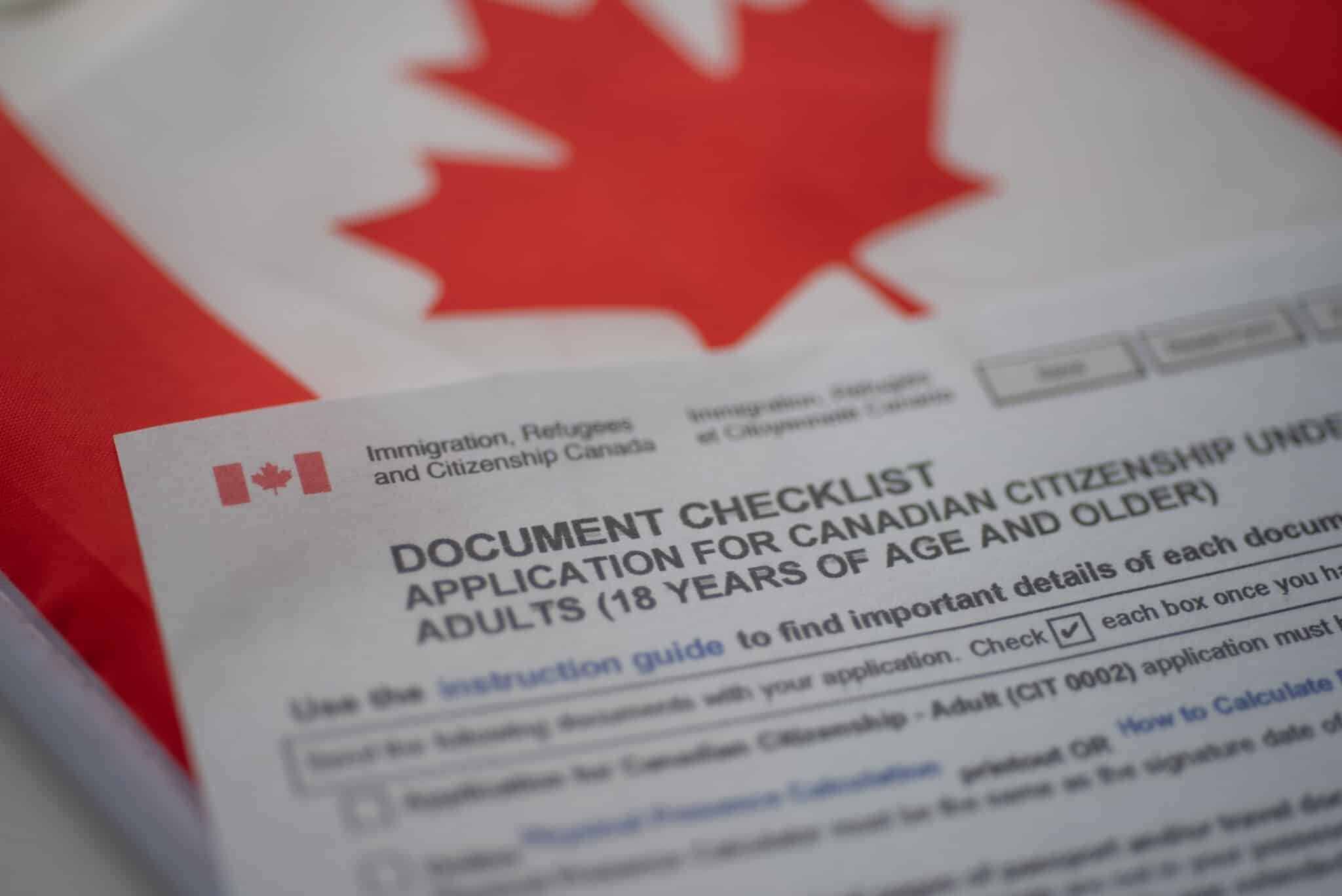
Lawyers think they have an argument. IRCC’s own application checklist, form CIT 0014, lists “any other evidence” of a parent’s Canadian citizenship as acceptable proof, which on its face permits alternatives to vital statistics records. The Federal Court has held that applicants may rely on the instructions the department publishes. In Somers-Edgar v. Canada 2026 FC 417, the court found it would have cost IRCC nothing to spell out what it required, a principle the court set earlier in Thompson v. Canada 2021 FC 914.
IRCC’s proof of citizenship guide tells applicants to include a letter of explanation for any record that is missing. A gap is not the problem. An unexplained gap is.
The Bill C-3 backdrop
Bill C-3 took effect Dec. 15, 2025, removing the first-generation limit on citizenship by descent. It replaced a Stephen Harper-era law that an Ontario Superior Court judge ruled unconstitutional in December 2023.
The new rules let people born or adopted outside Canada before Dec. 15, 2025 claim citizenship if they can prove a Canadian parent, a chain that can run back generations. Demand was immediate. IRCC took more than 12,000 applications in the first six weeks, and Americans ranked among the largest groups filing for Canadian citizenship by descent.
Political pressure is building. A Canadian ancestor does not by itself confer eligibility, Immigration Minister Lena Diab told the House of Commons on June 16. NDP immigration critic Jenny Kwan asked the minister’s office for an explanation and said some recipients are weighing a class-action suit.
What this means for Americans abroad
Americans have led global demand for a second passport, and the descent route offered one of the simplest paths to it. Canada already counts more than 250,000 American-born residents; this suspension hits a newer group, most still in the United States, who claimed status without ever moving.
For them, the Canada citizenship by descent suspension removes the assumption that an approved certificate is final. The document proves a status the law says recipients already hold by right of descent. A review can still pull it back. Recipients who built their case on genealogy-database printouts carry the most exposure. Those holding certified vital records from a source authority carry the least.
Scope is the open question. IRCC has not said whether this is a one-time cleanup of a flagged batch or the start of a stricter documentary standard applied to the roughly 82,000 files now in the citizenship certificate queue. The department has not answered media questions. The letters set no deadline for the review.