

The Curaçao pensionado scheme is now one of six explicit paths to permanent residence under the country’s new immigration framework, which took effect April 1 and replaced rules in place since 2019. Standard residence permits also stretched from one to three years. The six-week grace period for incomplete applications is gone.
The pensionado scheme taxes foreign-sourced income at a flat 10%. Pensions, dividends, capital gains and rental income from outside Curaçao all qualify. Applicants must be 50 or older, must not have lived in Curaçao for five years before applying, and must buy property worth at least XCG 450,000 (about $250,000) within 18 months.
What changed on April 1
The new policy lays out six routes to permanent residence:
- 10 years of continuous lawful residence
- Pensionado eligibility under the Income Tax Ordinance
- Investor’s permit above XCG 1.5 million (about $830,000)
- Birth in Curaçao with at least one parent holding a residence permit
- Two grandfathered routes for residents established before 2000 and 2005
The pensionado route now sits alongside investment and long-term residence as a codified path rather than an informal benefit.
Standard residence permits run up to three years instead of one. Short stays under six months, remote workers and tourist extensions still get the old terms.
Application standards tightened in parallel. Submissions must be complete at filing. Incomplete applications can be rejected outright and may affect future filings.
How the tax math works for Americans
The 10% Curaçao rate applies to foreign-sourced income. For most American retirees, that means Social Security, pension distributions, IRA and 401(k) withdrawals, and investment income.
Americans remain subject to US tax on worldwide income under citizenship-based taxation. The US has no income tax treaty with Curaçao following the 1988 termination of the Netherlands Antilles treaty. The foreign tax credit on US returns typically offsets the Curaçao liability for retirees in higher brackets.
Applicants choose between two pensionado variants:
- Standard: 10% flat tax on actual foreign income
- Deemed-income: XCG 500,000 (about $277,000) of foreign income taxed at progressive rates, producing roughly $152,000 in annual tax regardless of actual earnings
The deemed-income option suits retirees with very high income streams. The flat 10% suits most others.
Where Curaçao sits in the Caribbean retirement market
Curaçao competes for American retirees moving abroad against Mexico, Portugal and Costa Rica. Each offers either lower income thresholds or warmer tax treatment for pension income. Panama’s pensionado requires $1,000 in monthly income, and wealthy Americans have increasingly used it instead of the country’s golden visa. Costa Rica exempts foreign income from local tax entirely.
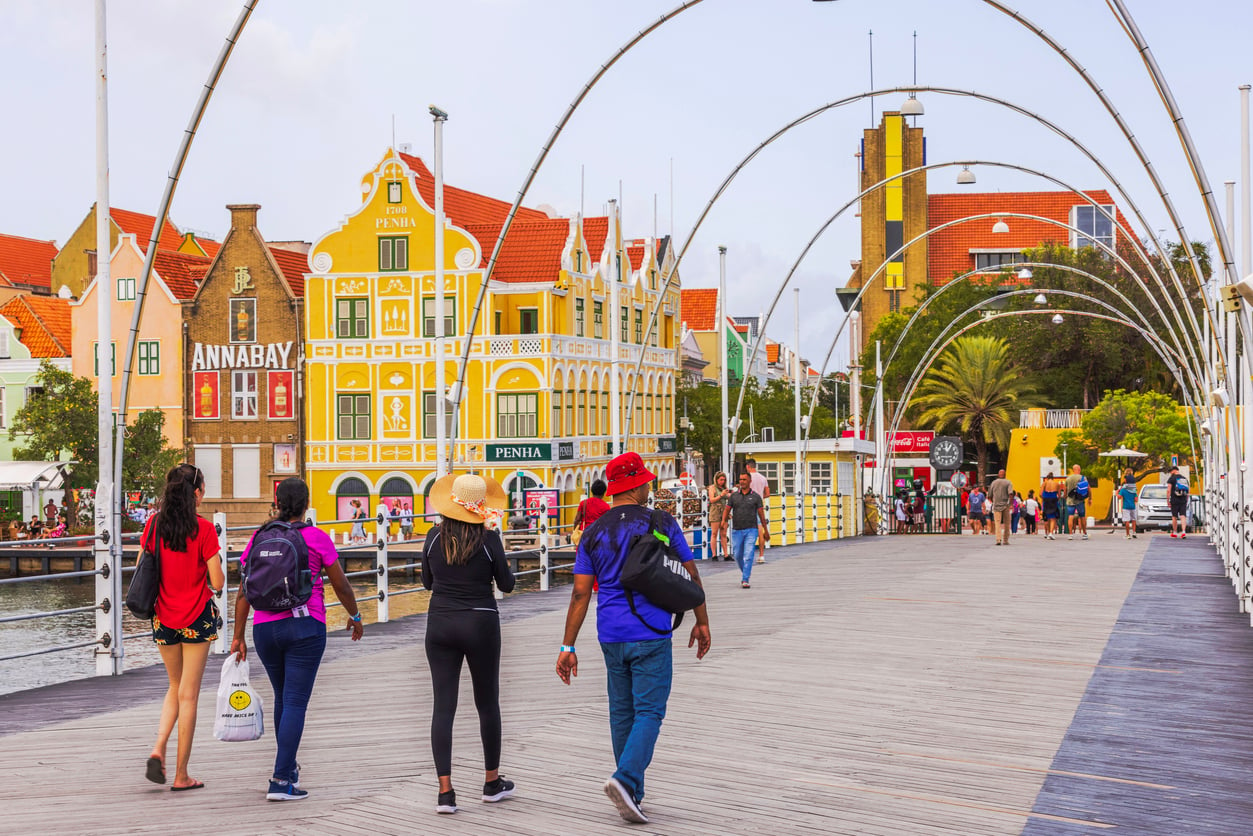
Curaçao sits above those programs on cost. The trade-offs are tropical climate outside the hurricane belt, English as a working language alongside Dutch and Papiamento, and a healthcare system anchored at St. Elizabeth Hospital in Willemstad.
Pensionado holders receive indefinite residence permits on approval. They bypass the 10-year residence wait that applies to other applicants.
What the policy doesn’t change
The core pensionado rules hold. The 50-plus age floor, five-year non-residency requirement and property purchase all remain. Pensionado holders still cannot perform local employment beyond a 40% ownership stake in a Curaçao company. Late or incomplete tax filings for two consecutive years still terminate eligibility entirely.
Non-pensionado retirees still need 10 years of continuous lawful residence. For Americans weighing Curaçao against Greece’s newer retirement visa or other Caribbean options, the April 1 changes make the pensionado route more administratively predictable. They do not make it cheaper. They do not change the US tax bill that follows Americans regardless of where they retire.