Jasmine Bugarín, a Mexican senator born in the United States to parents from Nayarit, went to the US Consulate in Guadalajara on Oct. 2 to start renouncing her American citizenship. Five days later, Mexico's dual nationality ban became law.
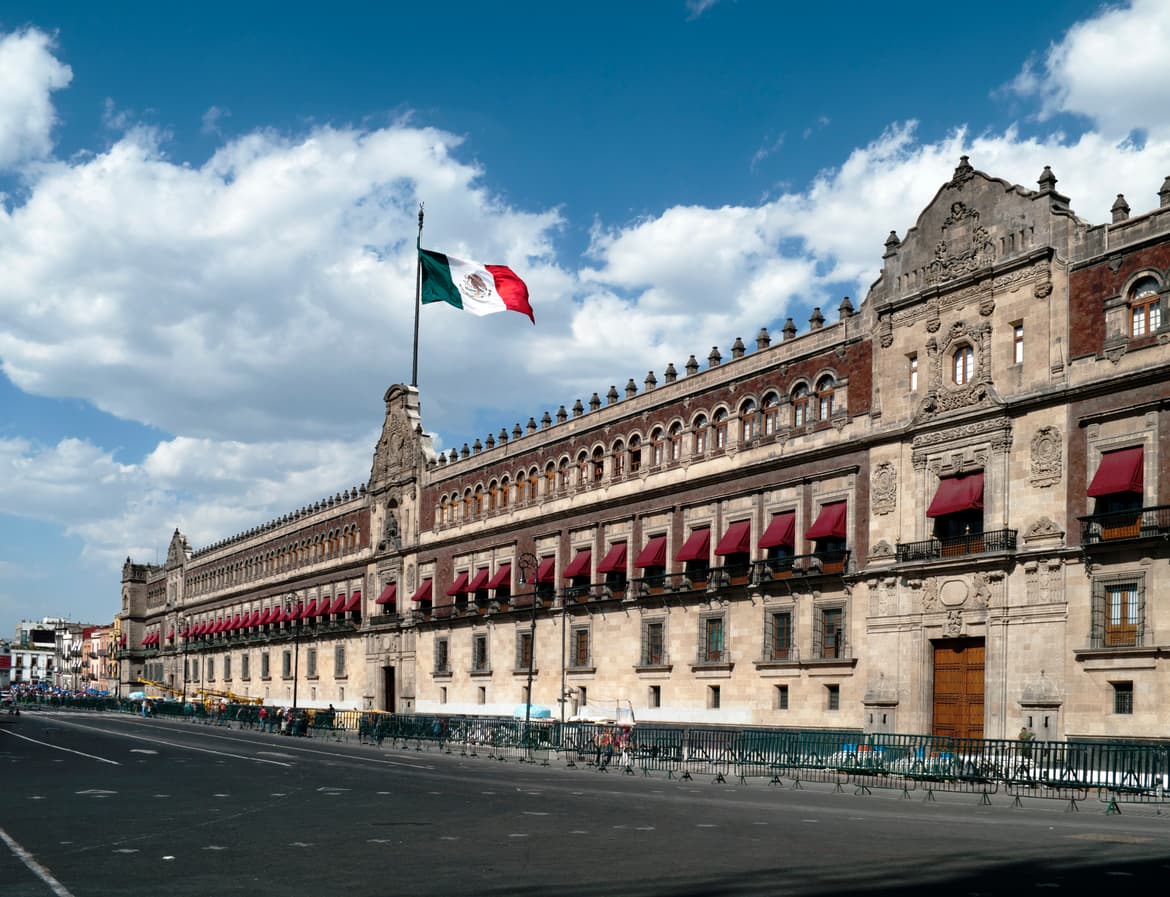
President Claudia Sheinbaum signed the constitutional amendment Oct. 7, and it ran in the government's official gazette the same day, PorEsto reported. Dual nationals are now barred from top executive office. That covers the presidency, all 31 governorships and the head of government of Mexico City.
What Mexico's dual nationality ban requires
The amendment rewrites Articles 82, 116 and 122 of the Mexican Constitution. Candidates for the three posts must hold Mexican nationality alone, so dual nationals have to renounce the other citizenship and prove the legal tie has ended before registering, Diario de Yucatán reported. Officeholders can't use foreign passports either.
The rules apply starting with the 2028 electoral process, so next year's governor races aren't covered. Luisa María Alcalde, the president's legal counsel, said it was too late to change the rules for the 2027 cycle, N+ reported.
The votes behind the amendment
Mexico's lower house passed the amendment Sept. 22 by a vote of 344 to 116, with one abstention, Excélsior reported.
The Senate followed Sept. 29, voting 86 to 42, with Morena and its allies, the Labor Party and the Green Ecologist Party of Mexico (PVEM), in favor and the National Action Party (PAN), the Institutional Revolutionary Party and Citizens' Movement against, per Mexico News Daily. Two of the yes votes came from US-born senators.
Morena's Ricardo Sheffield was born in Los Angeles and Javier Corral in El Paso, Texas. Sheinbaum has framed the change as a sovereignty measure, arguing no president should answer to "two flags," the outlet reported.
Twenty-two state legislatures ratified it, and the Senate formally declared the amendment approved Oct. 6, Código Qro reported.
Why did Bugarín act before the ban applied to her?
Bugarín, a PVEM senator on leave, is her coalition's coordinator in Nayarit and its expected candidate for governor in 2027. The ban doesn't reach that race.
She first filed paperwork with Mexico's Foreign Ministry, which can't end US citizenship on its own, Sopitas reported. Ricardo Monreal, Morena's leader in the lower house, then pressed her to go through the US State Department, saying it would be hard to justify passing the reform while exempting 2027 candidates, Uno TV reported. The consulate visit followed.
Bugarín cast the move as personal. "This decision goes beyond a legal procedure; it reflects my convictions and my loyalty to Mexico," she said in a social media video, La Razón reported.
A Texas-born senator says not yet
Cecilia Guadiana, a Morena senator from Coahuila, was born in Texas to Mexican parents. "It doesn't keep me up at night, and for now I'm not going to renounce my nationality," she said, El Imparcial reported. She hasn't ruled it out.
Guadiana said she didn't control where she was born 31 years ago and has lived in Mexico her whole life. Coahuila's next governor's race falls in 2029, inside the ban's reach. Asked about it, she said she doesn't know what she'll do next week, "let alone in 2029."
Who else the ban reaches
The amendment doesn't strip anyone's second nationality. That's narrower than Nicaragua's dual nationality ban, which strips citizenship from Nicaraguans who acquire another passport. Mexico's 2020 census counted 797,266 residents born in the United States, about two-thirds of the country's foreign-born population, though it doesn't show how many also hold Mexican nationality.
Critics still see a message in it. PAN Sen. Laura Esquivel Torres said the reform implies "migrants are less Mexican and do not have the same rights," Mexico News Daily reported. Larry Rubin, executive president of the American Society of Mexico, argued dual citizenship shouldn't be read as disloyalty and warned forced renunciation carries legal and tax consequences, La Razón reported.
Businessman Ricardo Salinas Pliego, a dual national, says it targets him. Analysts cited by Riviera Maya News pointed instead to former Tamaulipas Gov. Francisco García Cabeza de Vaca, a US citizen who has said he plans to run in 2030.
What this means for US-born Mexicans seeking office
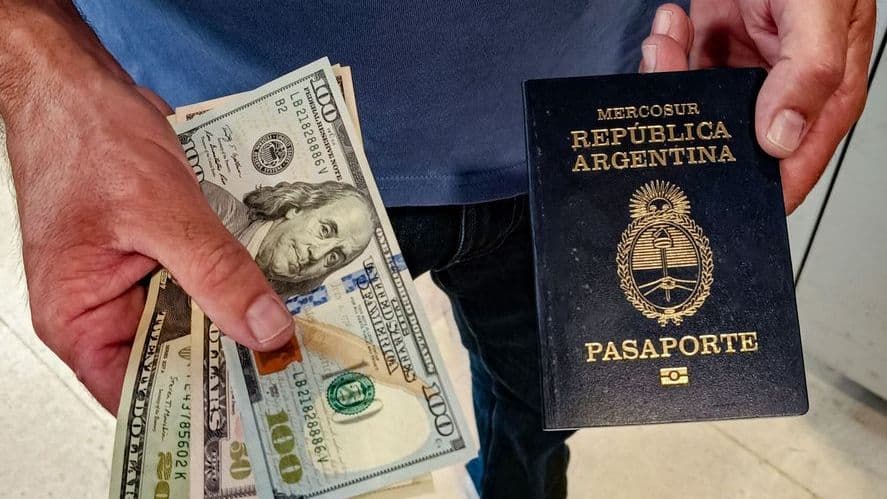
Giving up US citizenship isn't a form filed in Mexico City. It requires an in-person appearance before a US consular officer and a $450 fee, which the State Department lowered from $2,350 earlier this year. Approval comes as a Certificate of Loss of Nationality.
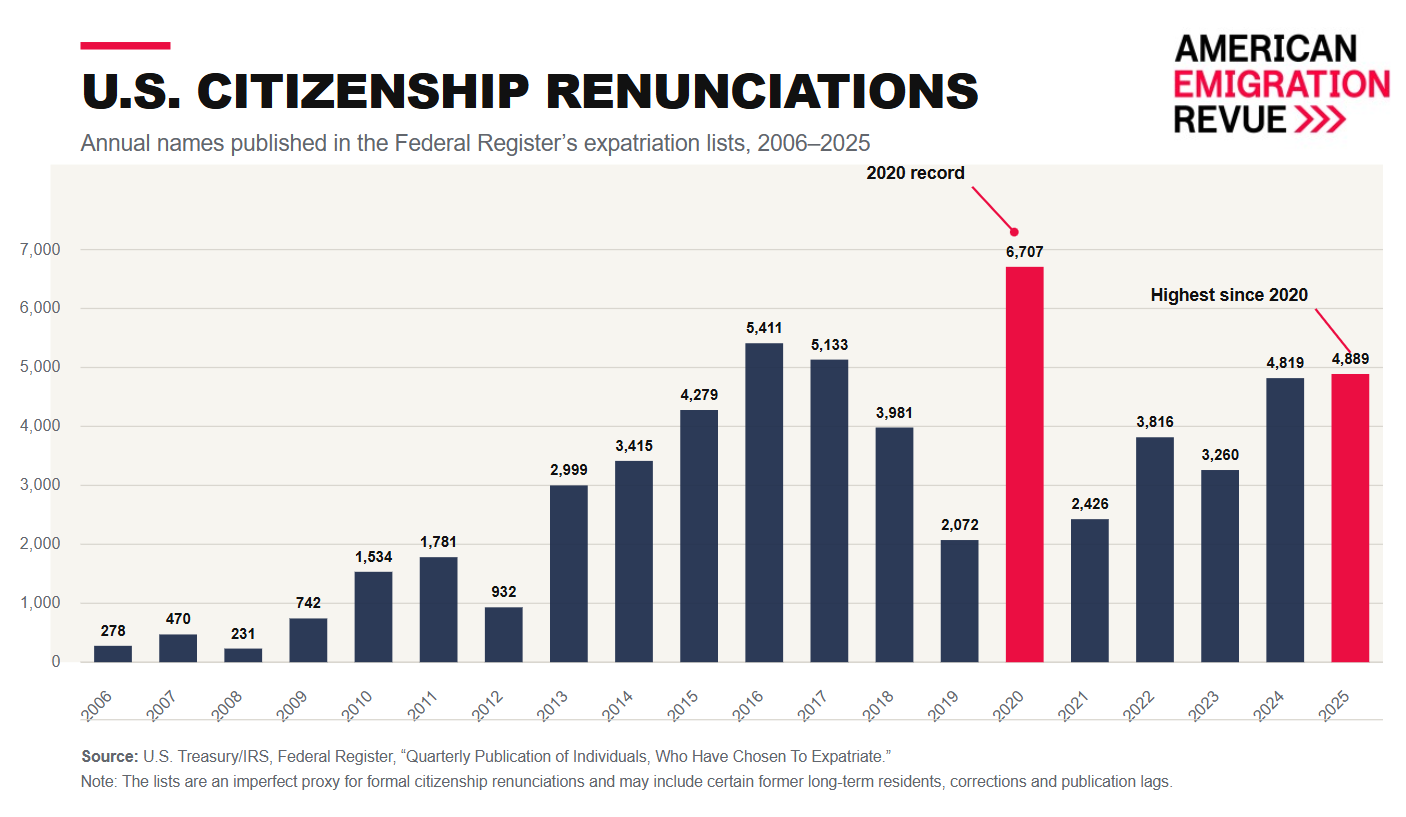
The IRS publishes the names of former citizens every quarter, and 1,462 appeared on the list for Q1 2026. Those who meet the IRS's covered expatriate thresholds can also owe an exit tax on unrealized gains.
Mexico's Congress has 90 days to rewrite its nationality and electoral laws, which would set how candidates prove a renunciation, Diario de Yucatán reported. Those rules don't exist yet. It's unclear what proof Mexican election officials will accept or how early a candidate would need to start the US process.