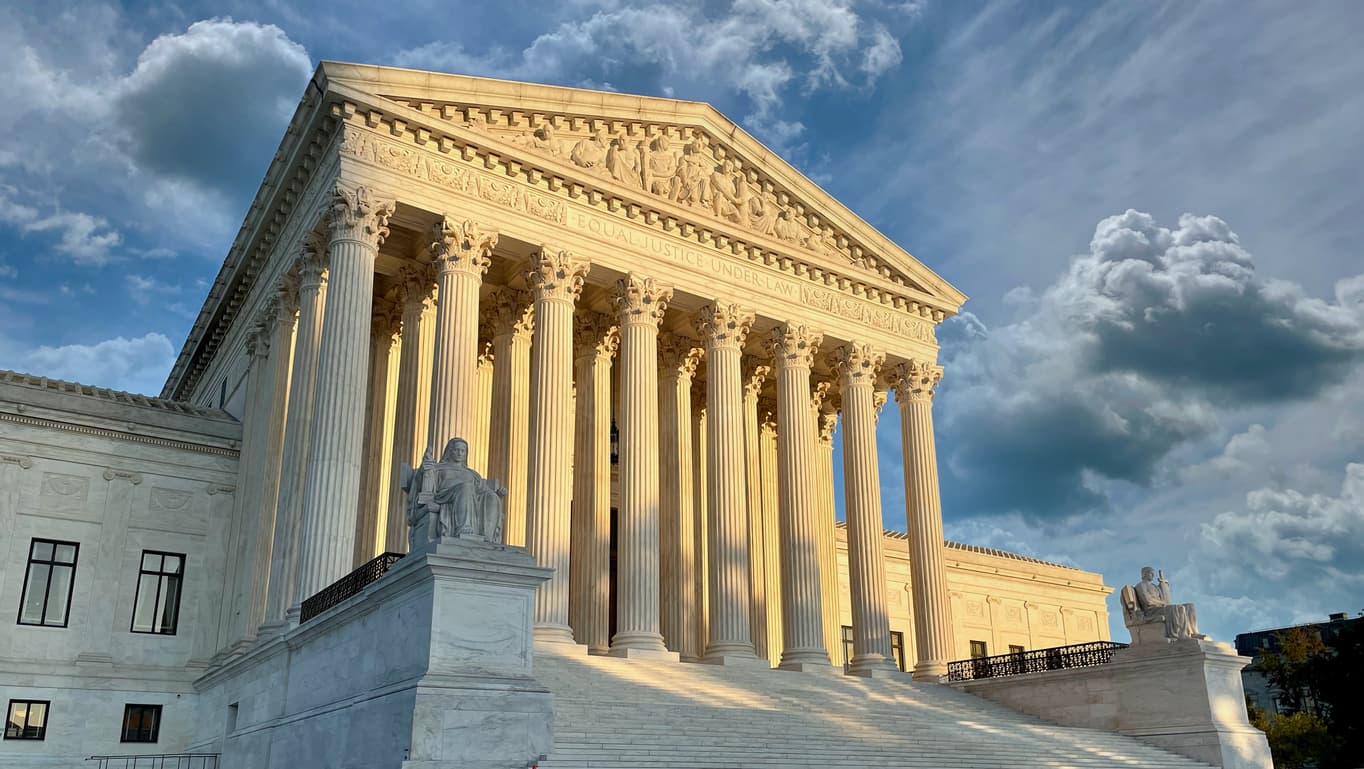
The Supreme Court on Friday restored an expanded federal system for checking the citizenship of registered voters, putting the program back in operation weeks before the Nov. 3 midterm elections.
The Sept. 25 order does not change the voting rights of Americans living overseas. But Americans abroad remain registered through U.S. states, which means their records could also be checked by state or local election officials using SAVE.
What the Supreme Court changed
The case centers on the Systematic Alien Verification for Entitlements program, better known as SAVE. The system dates to 1986 and has been used by some states for voter verification since 2005, but the federal government substantially expanded it in 2025 following an executive order from President Donald Trump.
The modified system checks voter information against additional Social Security Administration records and allows bulk searches. Election officials can submit identifying information that can include a voter's name, date of birth and full or partial Social Security number.
The Supreme Court's Sept. 25 order allows that expanded version of SAVE to operate while litigation over the program continues.
A failed SAVE check does not prove someone is ineligible
A SAVE result showing that federal records cannot confirm someone's citizenship does not necessarily mean that person is ineligible to vote.
The Supreme Court's decision discusses one Louisiana voter who demonstrated that Social Security records did not accurately reflect that she had become a naturalized U.S. citizen. Under the government's process, election officials are required to contact a voter in that situation and request proof of citizenship.
For Americans living abroad, that could mean dealing with an unexpected documentation request from thousands of miles away.
Americans abroad still use a US voting address
Living overseas does not by itself invalidate an American citizen's U.S. voting residence. Under federal overseas voting rules, many Americans continue using the address where they last lived before leaving the United States.
According to federal UOCAVA guidance, that address can remain a person's voting residence even if the voter no longer owns property or has other ties to the state, or is unsure whether they will return.
That voting address is separate from the person's residence abroad. It also keeps many Americans overseas inside state voter-registration systems that election officials can check through SAVE.
Overseas voters are not specifically targeted
Nothing in Friday's ruling creates a separate citizenship check for Americans living abroad. The practical issue is narrower: an overseas voter whose information does not line up cleanly across government databases could receive a request for additional documentation.
That adds another complication to an election cycle that has already produced several legal fights affecting Americans overseas. Laws allowing some U.S. citizens who have never lived in the country to vote through a parent's former state have faced court challenges in eight states, while the
Supreme Court this month left in place an order blocking new USPS ballot rules for the 2026 election.
The 90-day voter-roll rule still applies
Friday's ruling does not give states unlimited authority to purge voter rolls immediately before an election.
The National Voter Registration Act generally requires states to complete systematic programs aimed at removing ineligible voters at least 90 days before a federal election. With the Nov. 3 midterms already inside that window, the Supreme Court acknowledged that the rule limits what states can do with SAVE results right now.
The court, however, distinguished broad voter-roll maintenance programs from inquiries involving individual voters. Individual citizenship checks can still occur during the 90-day period, while the broader question of whether states can systematically remove alleged noncitizens during that window remains part of separate litigation.
The legal fight is not over
Friday's decision is temporary. The Supreme Court paused a lower-court ruling that had blocked the expanded SAVE system while the case moves through the appeals process.
Three justices dissented, raising concerns that outdated or incomplete federal records could incorrectly flag eligible voters. The underlying challenge to the system will continue.
What Americans voting from abroad should watch
For overseas Americans, the immediate takeaway is relatively straightforward. Their federal voting rights have not changed, living overseas does not by itself invalidate a U.S. voting residence and SAVE does not create a special rule for expatriates.
Still, voters abroad may want to keep an eye on a few things:
Their current voter-registration status.
Messages from their state or local election office.
Requests for citizenship documentation.
Deadlines for correcting registration problems.
That matters in a population where participation is already low. Only about 11% of eligible Americans abroad voted in 2024.
The Supreme Court's decision does not take away the right of Americans overseas to vote. It does restore another verification process that could require some voters to provide additional proof of citizenship.