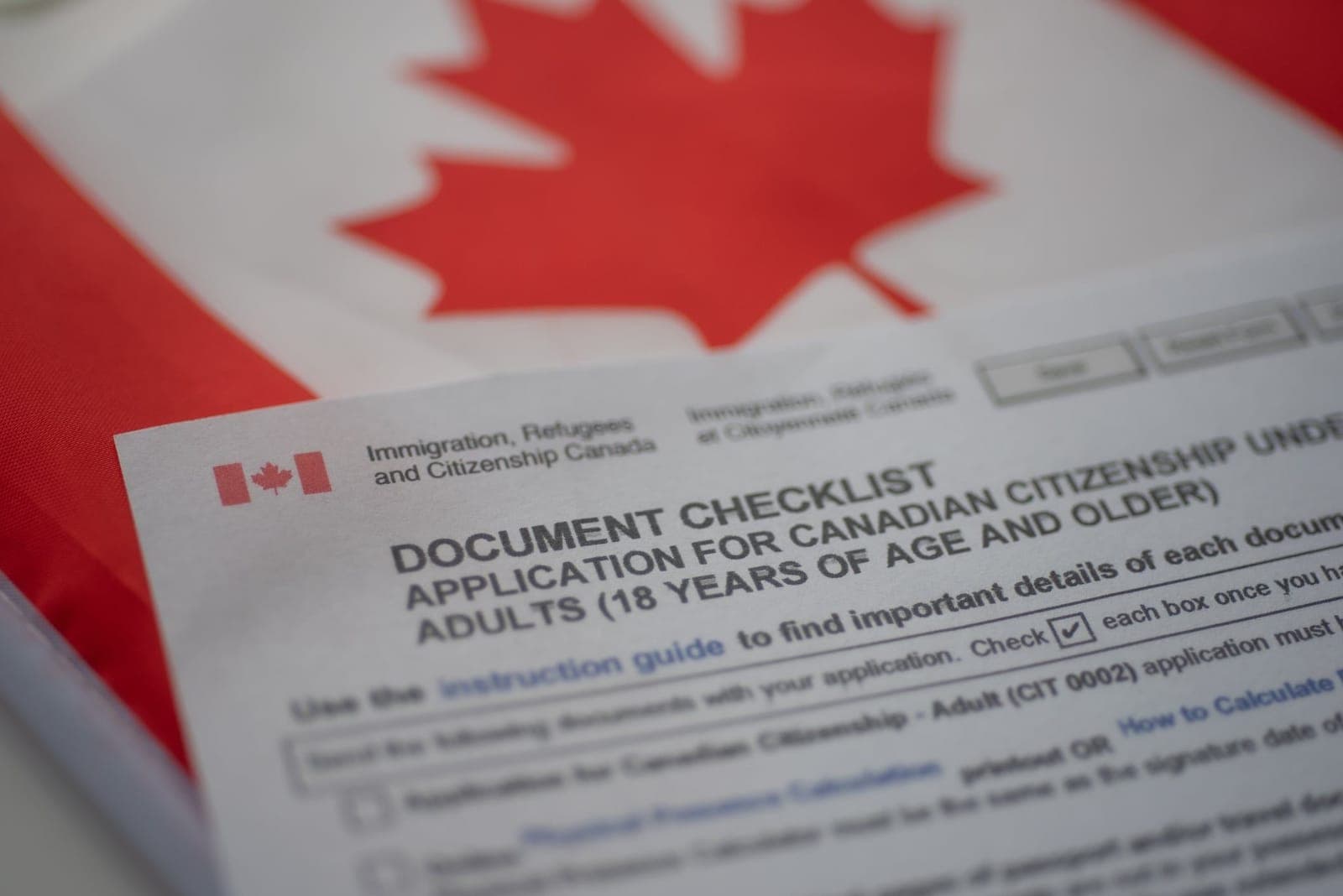
Canada's immigration authority began suspending approved citizenship-by-descent certificates on June 13, 2026, requiring recipients to return them for re-examination. The move, communicated by email rather than formal regulation, caught immigration lawyers off guard and threatens Americans who had secured the status as a pathway to living abroad.
Major U.S. brokerages have restricted or closed accounts held by clients with foreign addresses, citing the compliance cost of serving small numbers of non-resident customers across overlapping regulatory regimes. The account closures have become one of the least-visible financial costs of American emigration.
Overseas voter turnout tripled in the 2024 General Election yet still reached only 11% of the estimated 2.2 million voting-age U.S. citizens living abroad, leaving 89% on the sidelines, per the Federal Voting Assistance Program's 2024 Overseas Citizen Population Analysis. Domestic turnout that year was 76.1%.
A survey of American Citizens Abroad members conducted in October 2025 found 57% support extending Medicare to cover overseas medical services, with 34% backing full reimbursement and 23% partial. AudienceNet and NP Agency conducted the poll with 833 U.S. citizens living overseas; results were published May 19, 2026.
Latin America has long offered Americans the most accessible second-passport landscape in the world, with Mexico, Argentina, Brazil, Uruguay, Panama, Costa Rica, and most neighboring countries permitting dual citizenship without renunciation. The region accounts for the bulk of U.S.-citizen naturalizations abroad each year, including more than 125,000 Mexican-American dual citizenships granted in 2025 alone.
Curaçao's new immigration framework, effective April 1, established six explicit pathways to permanent residence, including the pensionado scheme, replacing rules in place since 2019. Standard residence permit durations extended from one to three years, and a six-week grace period previously available for incomplete applications was eliminated.
Austria granted 1,955 citizenships by descent in the first quarter of 2026, nearly all to overseas applicants using the restitution provision for descendants of Nazi-persecution victims, Statistics Austria reported May 11. Total naturalizations rose 21.2% year on year to 6,641, with the descent channel accounting for much of the increase.
Mauritius will require golden visa holders to invest $1 million within 12 months of arrival, Prime Minister Navinchandra Ramgoolam told parliament on May 5, with the program capped at 100 approvals per year.
South Korea expanded its Top-Tier Visa on March 3 to cover science and technology professors and researchers, extending a program previously limited to corporate employees in eight high-tech sectors including semiconductors and artificial intelligence. The Ministry of Justice framed the change as part of a 2030 strategy to counter the world's lowest birth rate, as American researchers are leaving the United States at the fastest rate in decades.
An estimated 9,600 U.S. citizens moved to Ireland in the year ending April 2025, nearly double the 4,900 recorded the previous year and the highest level of American arrivals since the Central Statistics Office began tracking the figure nearly 40 years ago. For the first time in the modern record, more Americans are moving to Ireland than Irish citizens are emigrating to the United States.
180,000 U.S. citizens left the country in 2025, the largest single-year outflow in decades, according to a Global Citizen Solutions briefing analyzing Pew Research Center data. In the first quarter alone, 1,285 Americans formally expatriated, a 102% year-over-year increase. The figures carry inherent imprecision: the federal government stopped tracking permanent departures in 1957.
A survey conducted March 17 to 18, 2026 found that 49% of Americans in Portugal would consider renouncing U.S. citizenship after obtaining a Portuguese passport. The result points to a shift in how Americans abroad weigh dual nationality against domestic political conditions and the ongoing obligations of U.S. international tax law.
France issued 13,122 first residence permits to U.S. citizens in 2024, with 7,182 classified under education, representing 54.7% of the American first-permit mix and up from 38.3% in 2015. The shift has reoriented France from a broad lifestyle and work destination into one where universities and academic programs are the dominant entry point for arriving Americans.
A growing number of Americans moving to Albania are skipping the Schengen permit grind entirely, drawn by a bilateral arrangement that lets US passport holders stay up to one year without a visa. The policy, restored under Diplomatic Circular Memorandum No. 124/2022, is one of the most permissive entry rules in Europe for US citizens. […]