Five CARICOM states operate citizenship-by-investment programs whose grants include free movement across the region. U.S. nationals are plausibly the largest single applicant group, yet they appear in neither set of records: not in destination-country resident tallies, not in U.S. emigration data.
Eurostat is the only destination-country statistical system that publishes harmonized, country-disaggregated migration data on U.S. nationals. The decade ending in 2025 reveals four overlapping American stories in Europe that pull in different directions.
The count of US citizens in Czechia hit 10,701 on Jan. 1, 2025, a 49% rise in five years, with Prague and a one-year trade-license route doing most of the pulling.
Americans moving to Brazil now sit among the country’s largest foreign residence cohorts, a slow climb back from the pandemic floor that the permit data only partly explains.
US-born arrivals to Australia held above 10,000 a year through the 2010s, then pandemic border closures cut them to 4,650. The 2024-25 count of 7,580 marks a partial, stalled recovery.
U.S. asylum claims in Canada reached 634 in 2025, more than triple the 204 filed the year before and the highest annual total on record outside the first Trump administration, per Immigration and Refugee Board data. Another 858 U.S. claims were pending as of December 31.
American students studying abroad reached roughly 90,000 in the most recent reporting year, up from about 50,000 in 2019, per Institute of International Education data. The strongest single-country signal is the United Kingdom, where U.S. undergraduate applications through UCAS rose 14% in the 2025 cycle, the largest annual increase since UCAS began collecting the data in 2006.
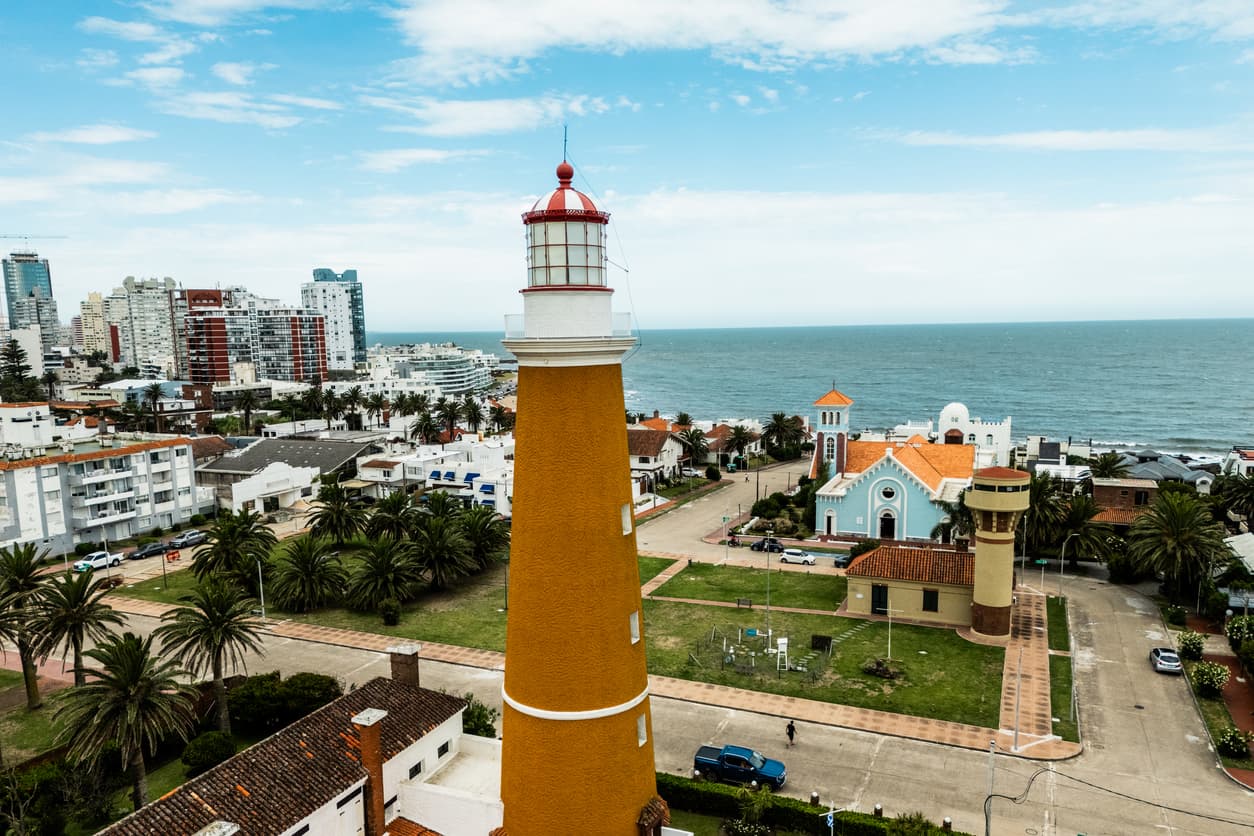
Americans filed 616 residency applications in Uruguay in 2025, more than double the 303 filed in 2024, per Dirección Nacional de Migración figures. January 2026 added another 56. The historical American resident stock has hovered around 3,000, modest against a country of 3.6 million, but the rate of change is new.
American residence permit activity in Mexico concentrated in three states in 2024, with Mexico City, Jalisco, and Baja California Sur accounting for 40% of national permits issued from January through October, per Instituto Nacional de Migración data. The top six entities together carried 63% of 23,502 recorded events, a distribution that tracks the established American settlement corridors.
Four Philippine agencies count Americans four different ways and produce four different figures. The Philippine Statistics Authority's 2020 Census recorded 30,033 U.S.-citizen household residents. The Bureau of Immigration's 2026 Annual Report counted 11,519 Americans with active visas. The U.S. State Department estimates the true population at 220,000 to 270,000, a range that dwarfs every official domestic count.
By Daniel Atz, Founder of the American Emigration RevueA few years ago, I conducted a study on Americans obtaining Luxembourgish citizenship. What I expected to be a niche legal curiosity quickly turned into something much bigger—an observable trend backed by hard numbers. Between 2018 and 2023, the number of Luxembourgish citizens in the U.S. grew […]
Summary: A February 23, 2025, article from the Portugal Resident addressed a popular misconception of a large-scale influx of U.S. citizens into Portugal, asserting that reports of an “American invasion” are exaggerated and not supported by official data. By the end of 2023, approximately 10,000 Americans were residing in Portugal, a number that continues to rise […]
Summary: Newly released figures from France’s national statistics agency, Insee, show that approximately 25% of U.S.-born residents living in France reside in Paris — France’s largest city, and home to some 2.1 million inhabitants. A February 20, 2025, article from The Connexion provides insights into the distribution of Americans across France and explores factors behind their settlement patterns. […]