
Americans who renounced US citizenship and now travel on passports from Visa Waiver Program countries are being refused ESTA approval and told to apply for visitor visas instead. US Customs and Border Protection has confirmed the change is deliberate. It hasn’t published a rule, a notice or a reason.
The Electronic System for Travel Authorization, or ESTA, is the online clearance that lets citizens of 42 Visa Waiver countries visit the US for up to 90 days without a visa. It’s a short online form that has cost $40.62 since Oct. 16.
What CBP confirmed
The denials started after an ESTA system update in June 2026, and the American Immigration Lawyers Association’s CBP committee first suspected a technical glitch. After an Oct. 23 liaison meeting, AILA reported that CBP’s Office of Field Operations had confirmed the change was intentional, not an error.
AILA’s Oct. 27 practice alert is open only to members, but the association’s public summary says the change can affect people who:
Were born in the US
Hold or once held US citizenship
May have renounced US citizenship
No public government document reflects it. The State Department’s page on relinquishing nationality still says former citizens need a visa or “must show that they are eligible for admission pursuant to the terms of the Visa Waiver Program.”
What about individuals with dual citizenship?
Nothing changes for them. Current dual citizens were never eligible, because US citizens must enter on a US passport, and DHS routinely denies or cancels ESTAs for dual citizens. The change lands on former citizens, who could previously use ESTA like any other national of their new country.
Who is caught by the ESTA change
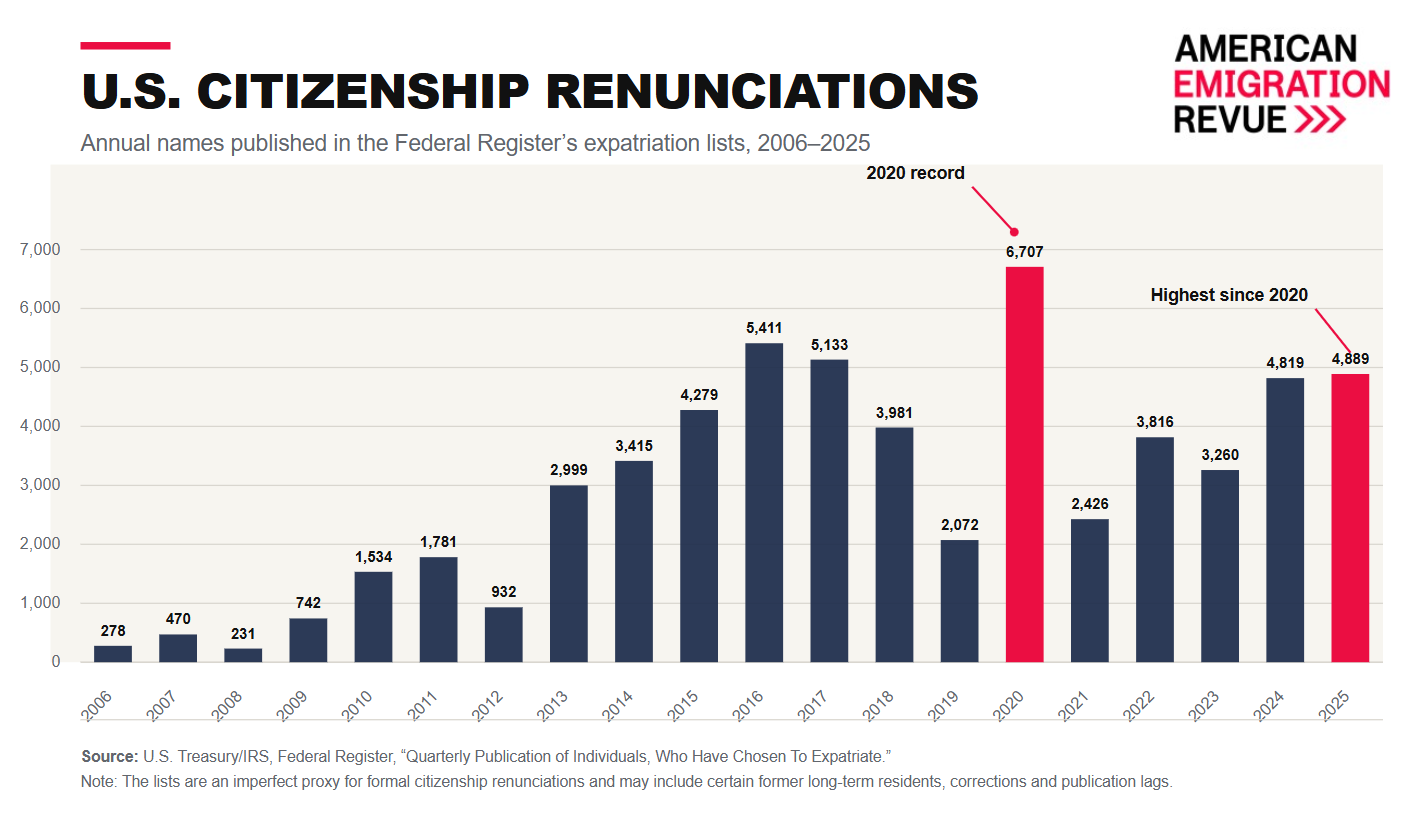
The pool is growing. The IRS expatriation list carried 4,574 names through September, up about 16% from the same period of 2025, in a year the State Department cut the renunciation fee from $2,350 to $450. That list also includes long-term green card holders, who aren’t affected by this change.
Former Americans who became Canadian aren’t affected either. Canadians don’t need an ESTA or a visa for short US visits.
Everyone else now faces a consular process. A Certificate of Loss of Nationality, the State Department document confirming someone is no longer a US citizen, doesn’t fix the problem on its own. It proves a person’s citizenship history, not their right to travel visa-free.
What the visitor visa line looks like
A B-1/B-2 visitor visa carries a $185 application fee and an in-person consular interview. Waits for that interview vary sharply by post.
The State Department’s wait-times table, last updated Oct. 21, put the next visitor visa appointment less than two weeks out in London, Berlin, Paris, Madrid and Dublin. It was 2.5 months in Frankfurt, four months in Milan and 16 months in Sydney, while Melbourne and Perth were 1.5 months and one month.
For most former Americans in the UK or Germany, that adds a few weeks to a trip. For one applying in Sydney, it can push a family visit more than a year out, a gap that varies even within Australia.
Is this the Reed Amendment?
Not on paper. The Reed Amendment, added to immigration law in 1996, makes a former citizen inadmissible if found to have renounced to avoid US taxes. Nothing public ties the ESTA denials to it, and DHS has never published regulations to carry it out.
Lawyers disagree on what the change is. Washington immigration lawyer George Ganey reads it as a deliberate policy shift. New York immigration lawyer Mona Shah calls it an undocumented internal policy applied inconsistently. “A published rule can be challenged, and a helpdesk script cannot,” she said.
What’s still unknown
CBP hasn’t said how many former citizens have been denied, what criteria the system applies or whether the change is tied to tax-motivated renunciation at all. Its ESTA guidance makes no mention of former citizens.
A denial doesn’t bar entry to the US. It moves the decision to a consulate, and each refused ESTA still costs $10.62 in processing. AILA has suggested former citizens may be able to send a copy of their Certificate of Loss of Nationality to the ESTA office and ask for a review. Ganey says he’ll have clients try ESTA first but assume they’ll need a B-1/B-2 visa. Shah advises going straight to the visa, saying reapplying tends to produce the same answer.
For a group that grew by thousands this year, a route that used to take minutes online now runs through a consulate.