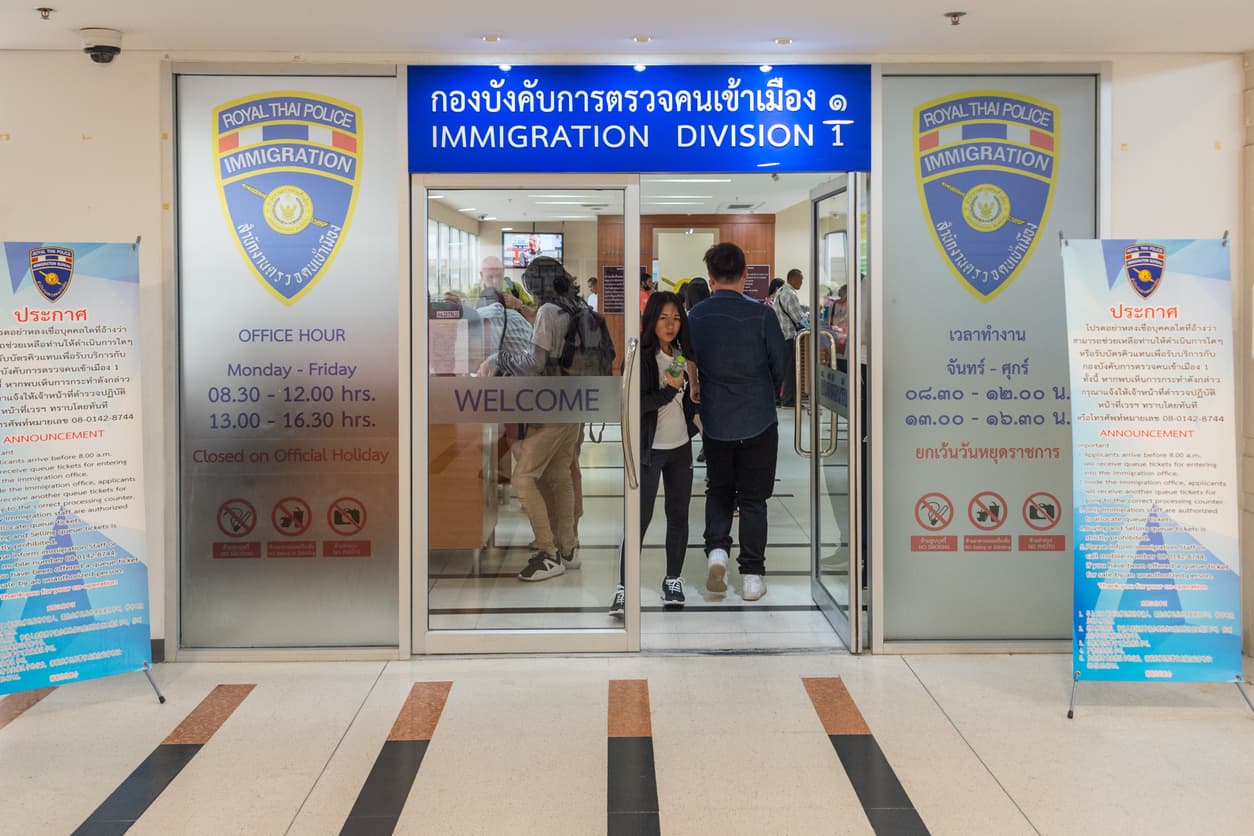
Thai immigration police arrested an American company director at a luxury residence in Bangkok’s Sukhumvit area on Oct. 15 over more than 1 million baht (about $30,000) in unpaid employee wages, Thai Examiner reported. It’s the latest case of an American arrested in Thailand on a labor complaint rather than a visa violation.
The man is identified in reports only as “Michael.” He directs a company that supplies machinery, equipment and software to the beer and wine industries and also imports and distributes food and beverages. Neither his surname nor the company’s name has been released.
What the warrants allege
Two arrest warrants from the Samut Prakan Provincial Court, dated June 22 and Aug. 14, accuse him of jointly failing to pay employees correctly and on time. They also accuse him of failing to comply with an order from a labor inspector. Police haven’t named any other suspects.
Immigration Division 3 officers made the arrest during an Immigration Bureau operation targeting foreign nationals with outstanding warrants. Nearly four months passed between the first warrant and the arrest.
The number of workers and their nationalities weren’t disclosed. The 1 million baht figure is the combined total of their claims.
Where the case stands
Officers transferred him to Bang Sao Thong Police Station in Samut Prakan for further proceedings. The allegations are unproven, and no response from him or a lawyer has been published. No bail, plea or court date has been announced.
Other recent arrests of Americans in Thailand
It’s the second time since August that Thai enforcement against foreign-run businesses has reached Americans. Two Americans were arrested within five days in Thailand’s nominee crackdown, one in an Aug. 10 raid in Hua Hin and one among 14 foreigners detained on Koh Samui on Aug. 15.
That campaign targets foreigners who hold Thai land through companies with figurehead Thai shareholders. The US-Thai Treaty of Amity lets American-owned firms operate much like Thai companies, but the treaty doesn’t cover land ownership.
A separate case involved violence rather than business. Bangkok police charged 29-year-old Alexander Troy Lopez with attempted murder on Aug. 22, alleging he cut a traffic officer across the neck with a box cutter after a 7-Eleven theft.
What Thai labor law allows
Thailand treats unpaid wages as a criminal offense, not just a civil dispute. An employer who fails to pay wages under the Labor Protection Act faces up to six months in prison, a fine of up to 100,000 baht (about $3,000) or both. Ignoring a labor inspector’s payment order carries up to one year in prison and a fine of up to 20,000 baht (about $600).
When the employer is a company, directors and managers can be held personally liable. The exception is when they can prove the offense happened without their knowledge or consent. In 2023, Thailand’s Supreme Court upheld a suspended one-year sentence against a managing director who ignored two inspector orders, even though his company had already been wound up.
What the US Embassy can and can’t do
Consular officers can’t get Americans out of detention, give legal advice, represent anyone in court or pay legal, medical or other fees. They can visit detainees, contact family with written consent, explain the local legal process and provide a list of English-speaking local attorneys.
The embassy in Bangkok says it can’t interfere in the Thai judicial process or provide bail money. Thai police can hold a suspect for 48 hours before a judge reviews the detention. After that, judges can extend investigative detention in 12-day blocks, up to 84 days.
Bail usually requires cash or assets located in Thailand. Trials run in Thai before a judge with no jury, and translation isn’t guaranteed. There’s no discovery process, so defendants don’t see the evidence ahead of trial.
What’s still unknown
His full name, his company’s name, the number of workers and the exact sum owed all remain undisclosed. So does whether he faces a court hearing or has applied for bail. If he’s convicted, his immigration status in Thailand could become the larger issue, as it has for other foreigners facing serious charges there.